DUARTE AZNAR ARQUITECTOS
Paseo 60
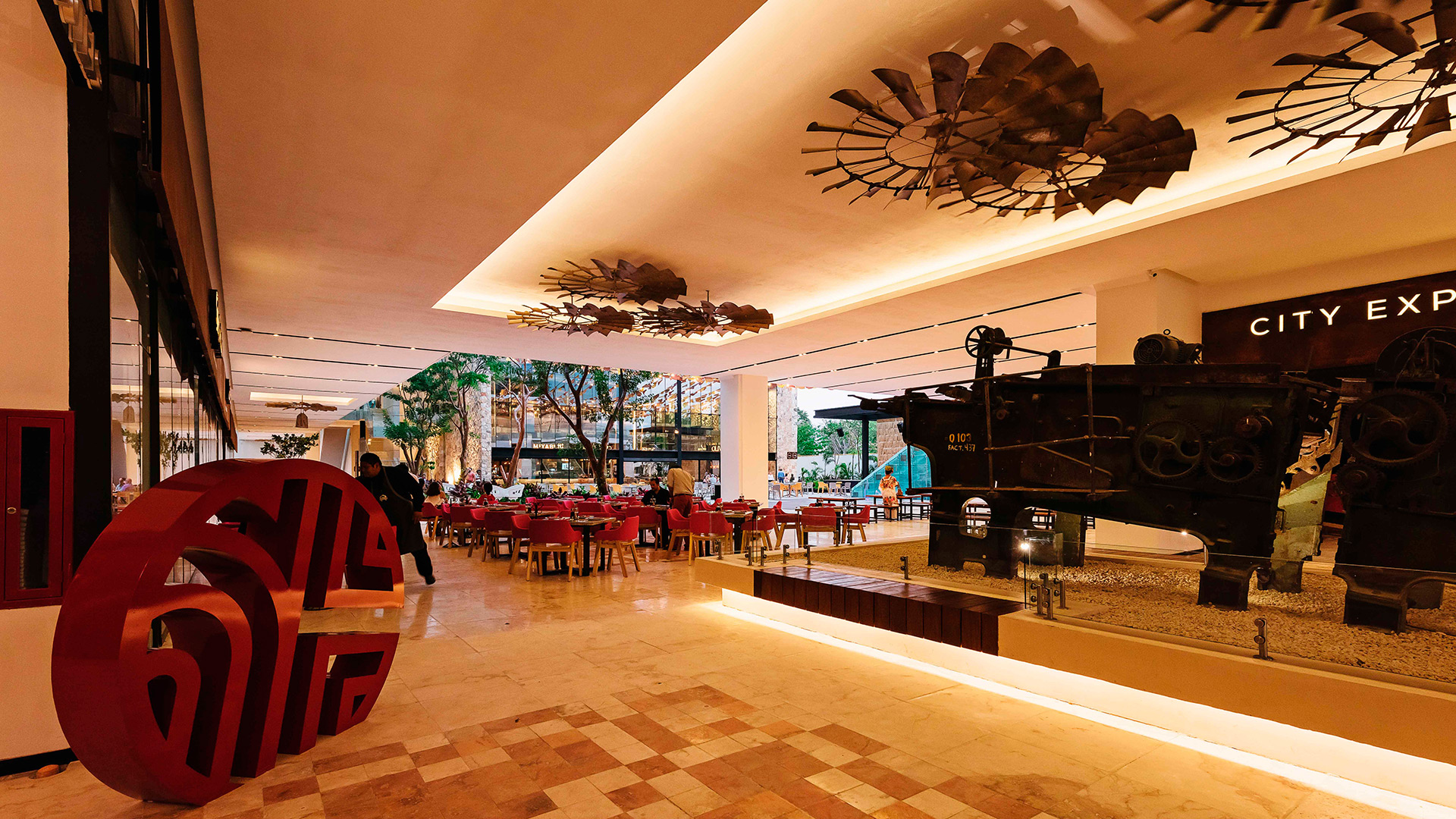
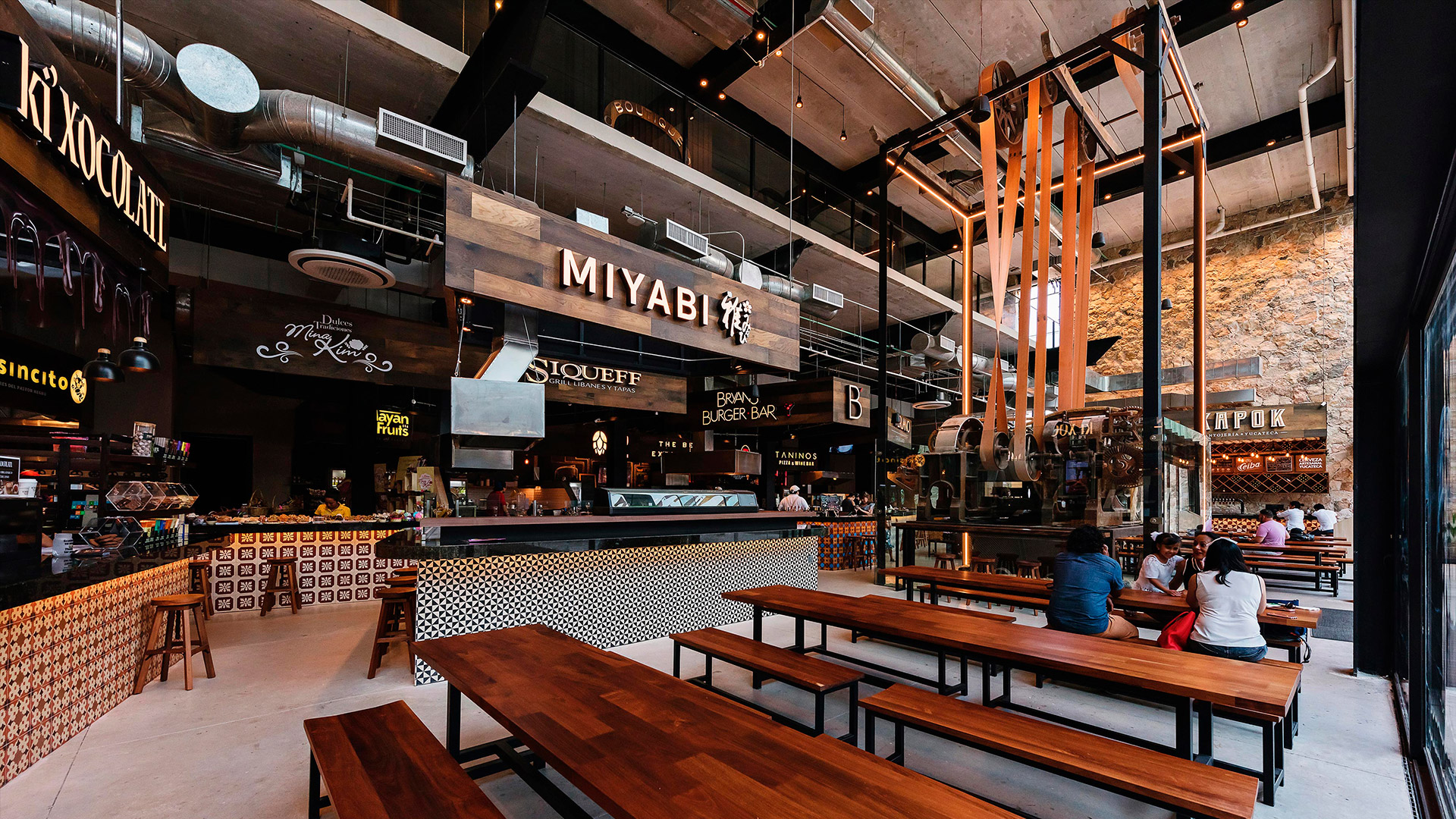
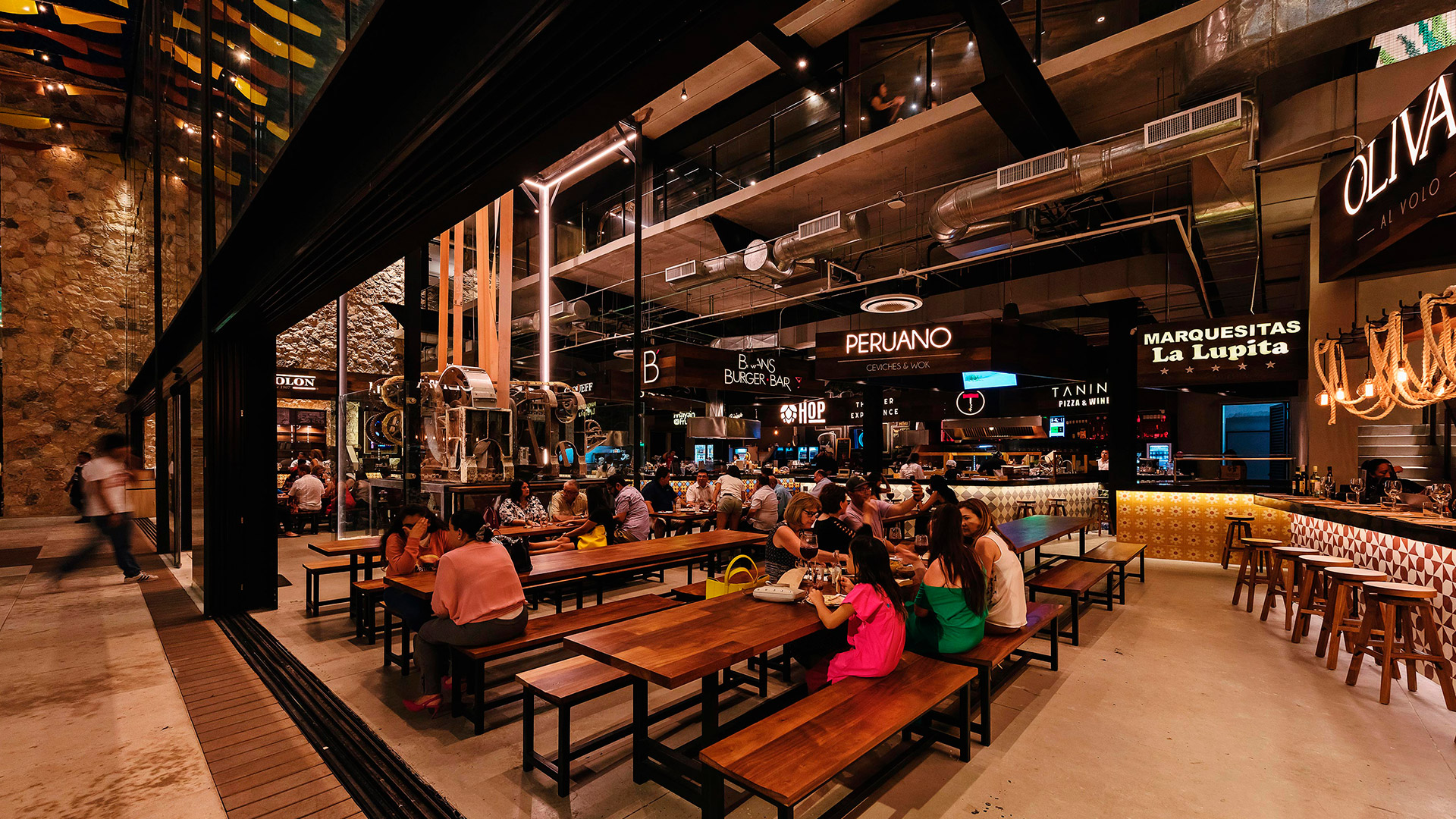
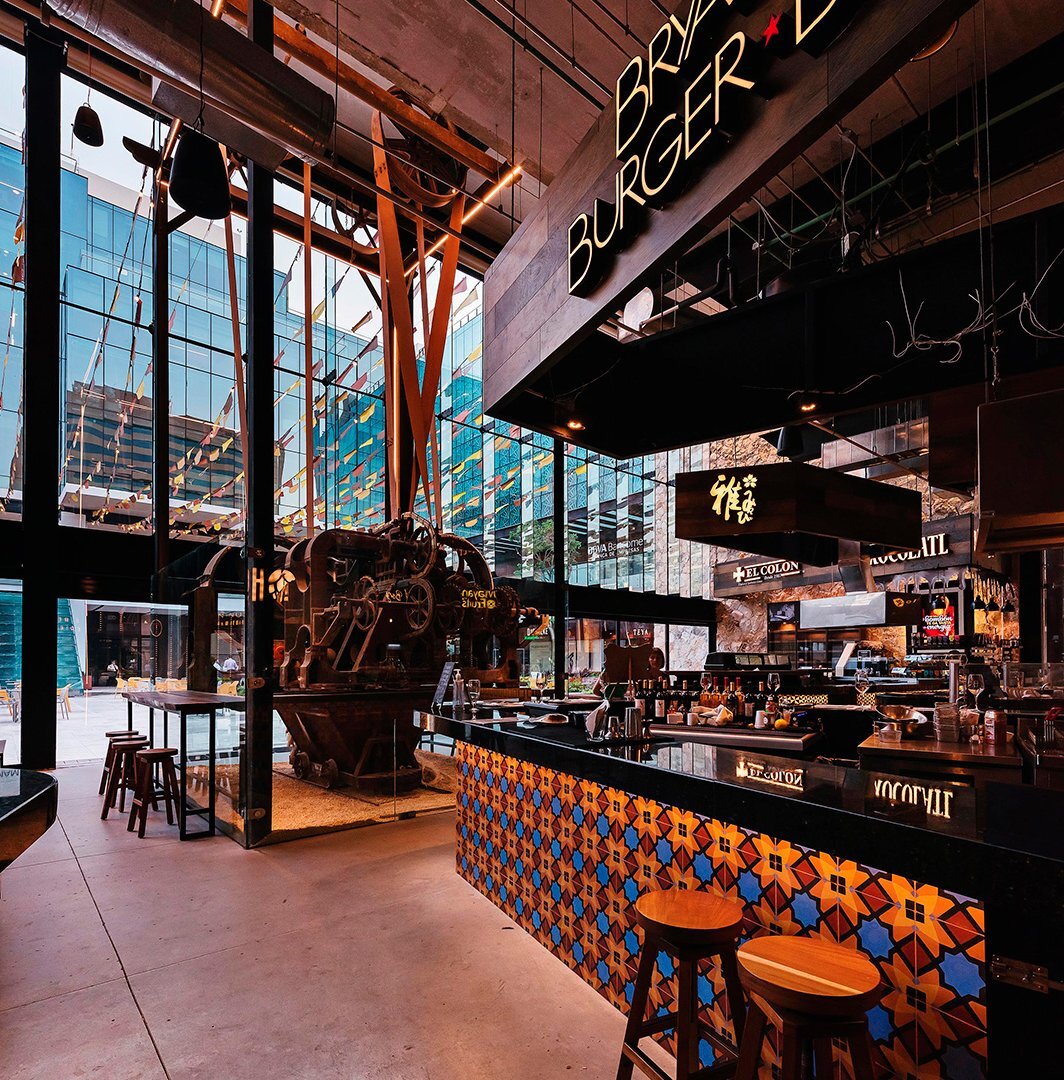
Mixed Use Complex + Gourmet Market "House of Machines"
GALLERY
PROJECT OVERVIEW
Can a contemporary project revitalize the historic center without displacing its memory?
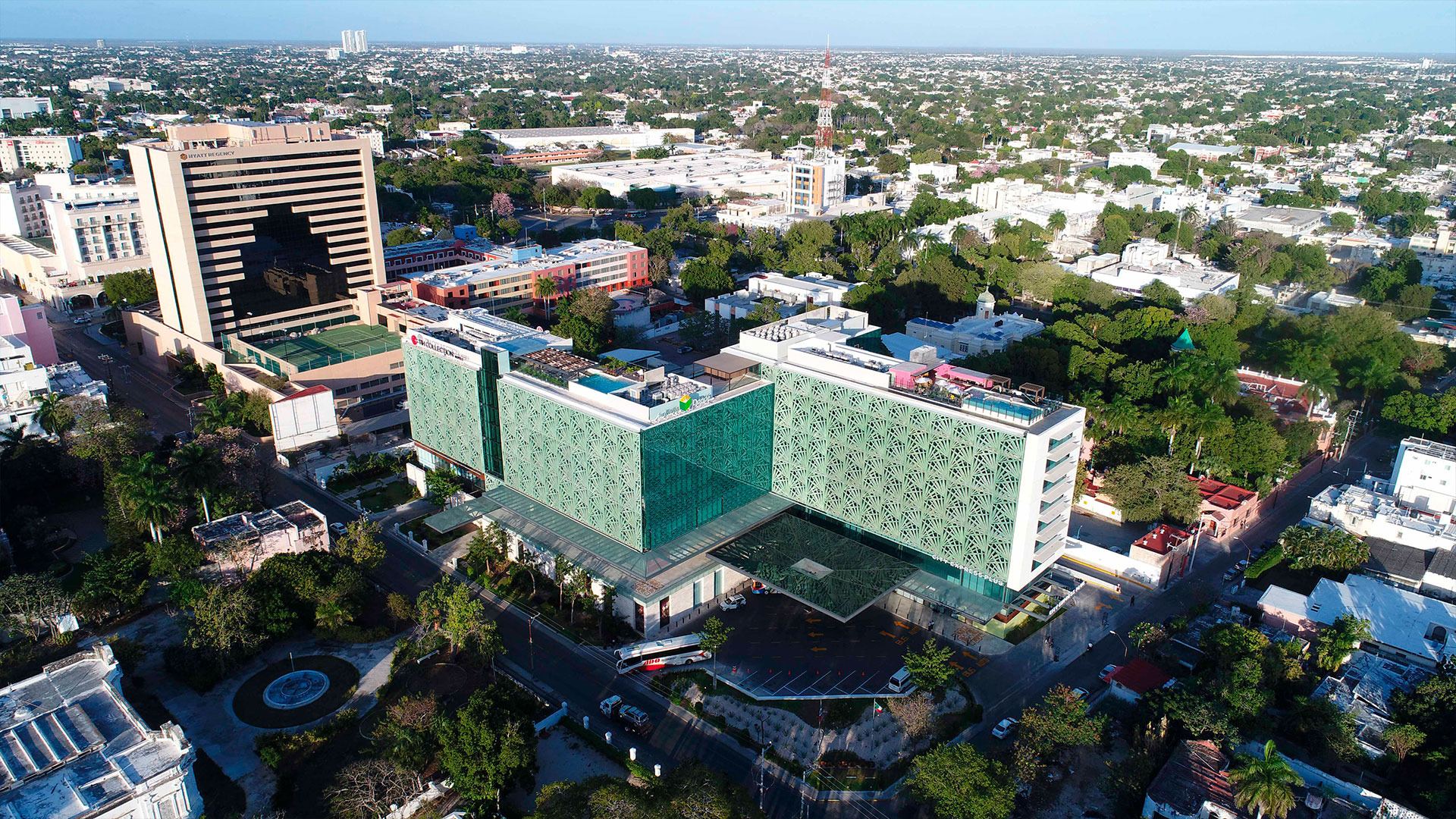
For decades, an empty lot on Calle 60 —between Porfirian mansions and the iconic presence of Paseo de Montejo— remained dormant, as an urban pause. For us, it was a piece waiting to be awakened; a space where architecture, culture, history, and daily life could coexist, dialogue, and renew themselves.
This is how Paseo 60 emerged: a mixed-use complex that interweaves the public and the intimate, the commercial and the cultural, everyday traffic and permanence.
It is a project that not only builds but restores the urban vocation of downtown: to serve as a meeting point for locals and travelers alike.
Client
Labrea Real Estate
Project type
Commerce & Offices
Location
Mérida, Yucatán, México
Built area
41,850
Year(s)
2016-2018
Awards & Publications
- Finalist for the 2019 Obras Award in the Building category.
See more...
Publications
ColorLife Trends 2021 Compendium. Comex. 2021.
Podio Magazine. April 2020.
Participants
Enrique Duarte Aznar
Cindy Parra Roca
José Luis Estudillo Robleda
Hervé Jiménez Meza
Eduardo Gómez Arana
Luis González Coyoc
Collaborators
Structure and prefabricated elements: PREDECON
Lighting: Grupo AEI
Electrical: ILURGIA
Hydraulics, sanitation, irrigation, rainwater drainage, and fire protection: SAVC
Landscaping: Tania Domínguez
Photography: Tamara Uribe
AWARDS & PUBLICATIONS
- Honorable Mention at the 13th Yucatecan Architecture Biennial, 2021.
- Honorable Mention at the 13th Yucatecan Architecture Biennial, 2020.
- Black & Silver Medal at the 10th CIDI Ibero-American Biennial of Interior Design, Design & Landscaping, 2019-2020.
- Gold Medal in the Hospitality and Real Estate Heritage category at the 10th CIDI Ibero-American Biennial of Interior Design, Design & Landscaping, 2019-2020.
- Third Place in the Commercial Interior Design category of the 13th AAI National Architecture and Interior Design Awards, 2019.
THE CHALLENGE
A balance of memory, functionality, and character
Paseo 60 is inserted into a sensitive location defined by its historical relevance and daily bustle: the Historical Monuments area.
Here, every decision had to negotiate with heritage, urban scales, INAH regulations (a Mexican federal agency for cultural and historical preservation), and the site's touristic and commercial potential.
Additionally, simultaneous constraints existed:
- Maximum heights regulated by adjacency to historic mansions.
- Limited depth due to the geological water table.
- A demanding architectural program.
- The need to prioritize relevant views.
- Extreme hot weather.
THE CONCEPT
Two yucatecan archetypes as a foundation: plaza and patio
To anchor the project to Merida’s historical and social fabric, the proposal was structured around two fundamental regional architectural concepts: the plaza and the patio.
These spaces—the first civic, the second intimate—have always been the heart of Yucatecan social life.
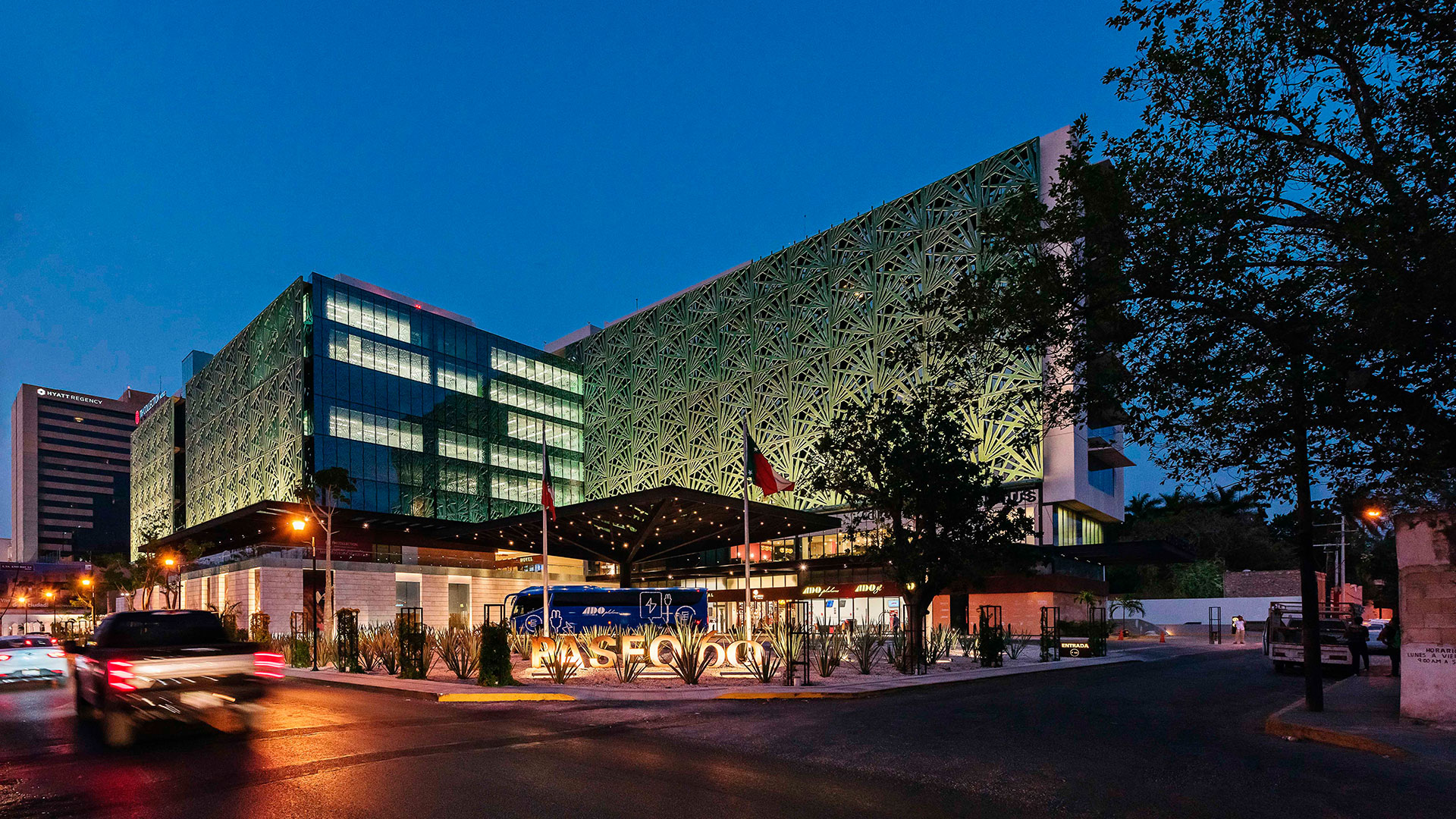
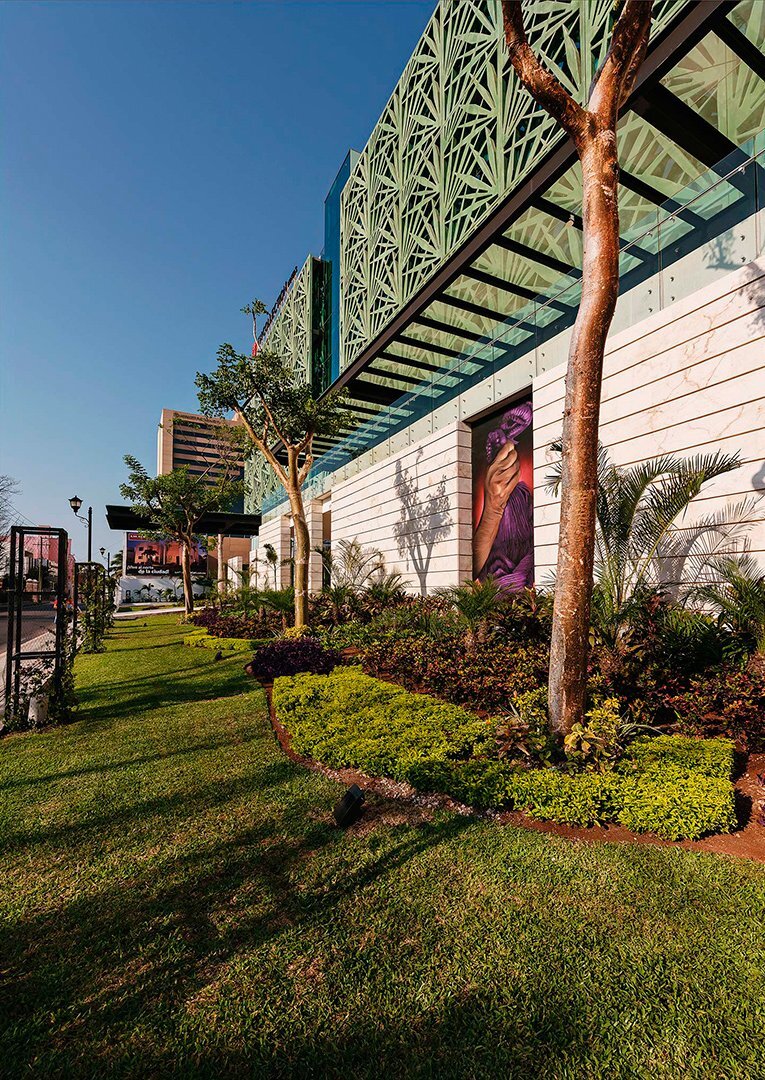
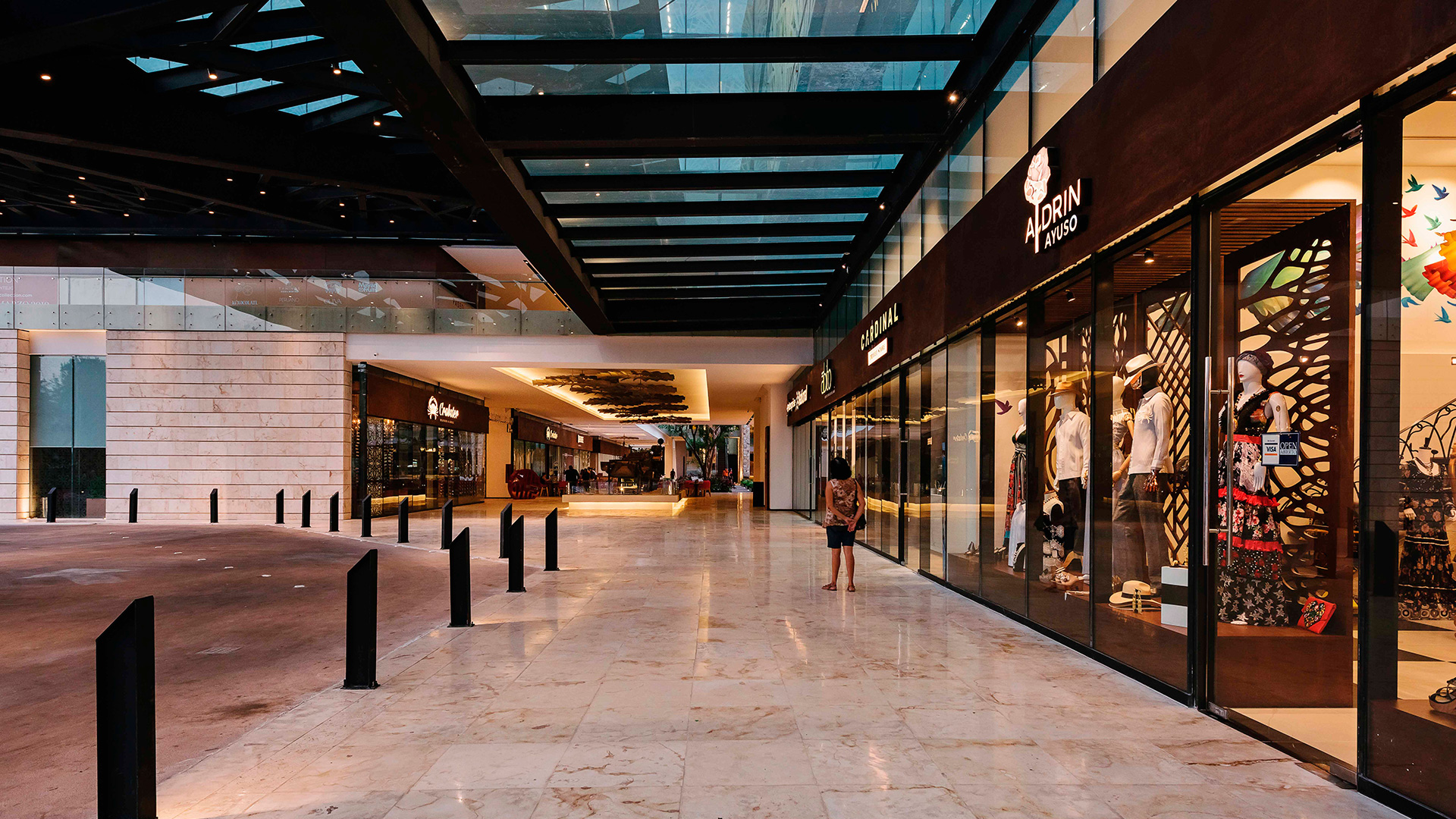
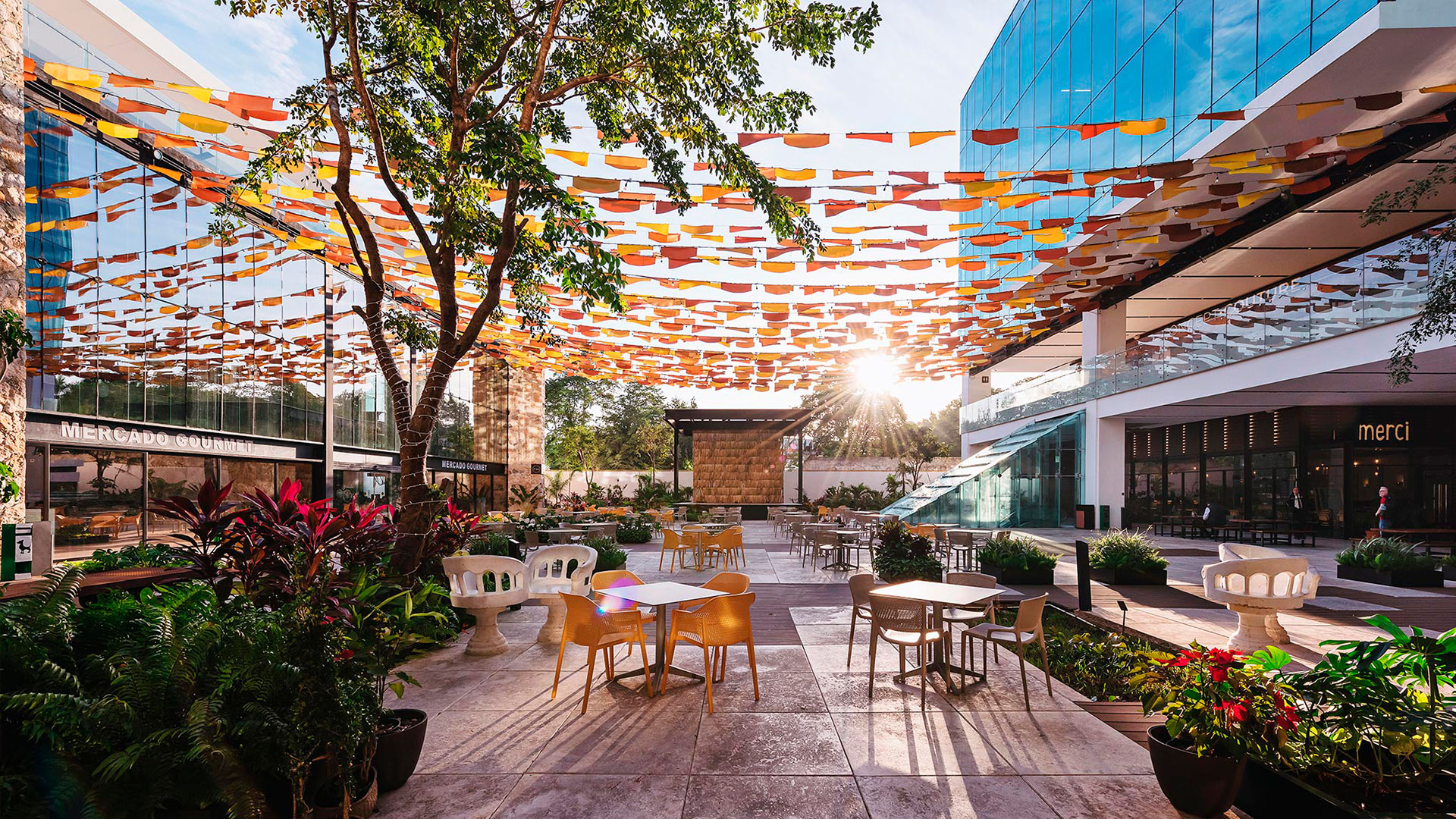
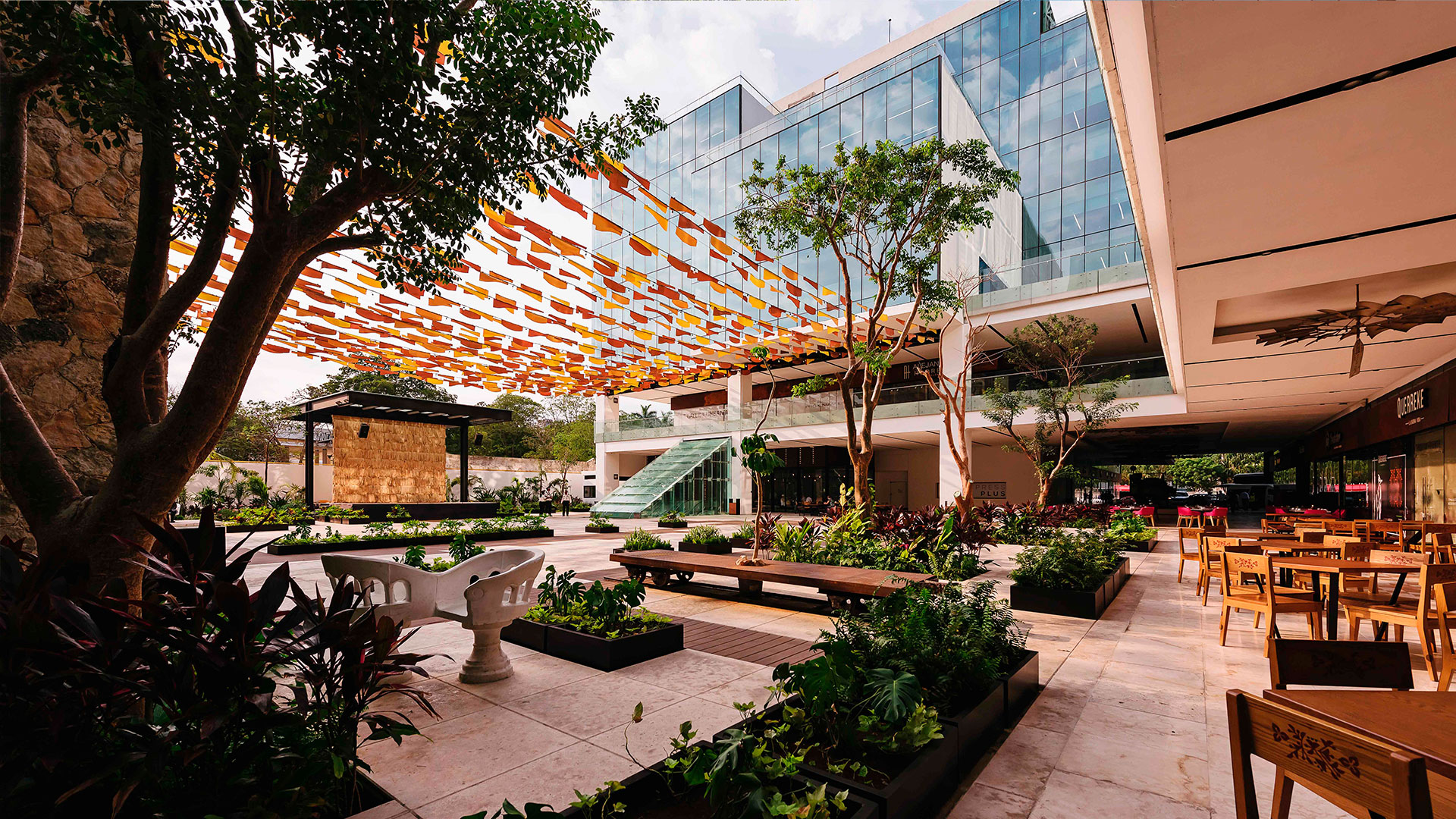
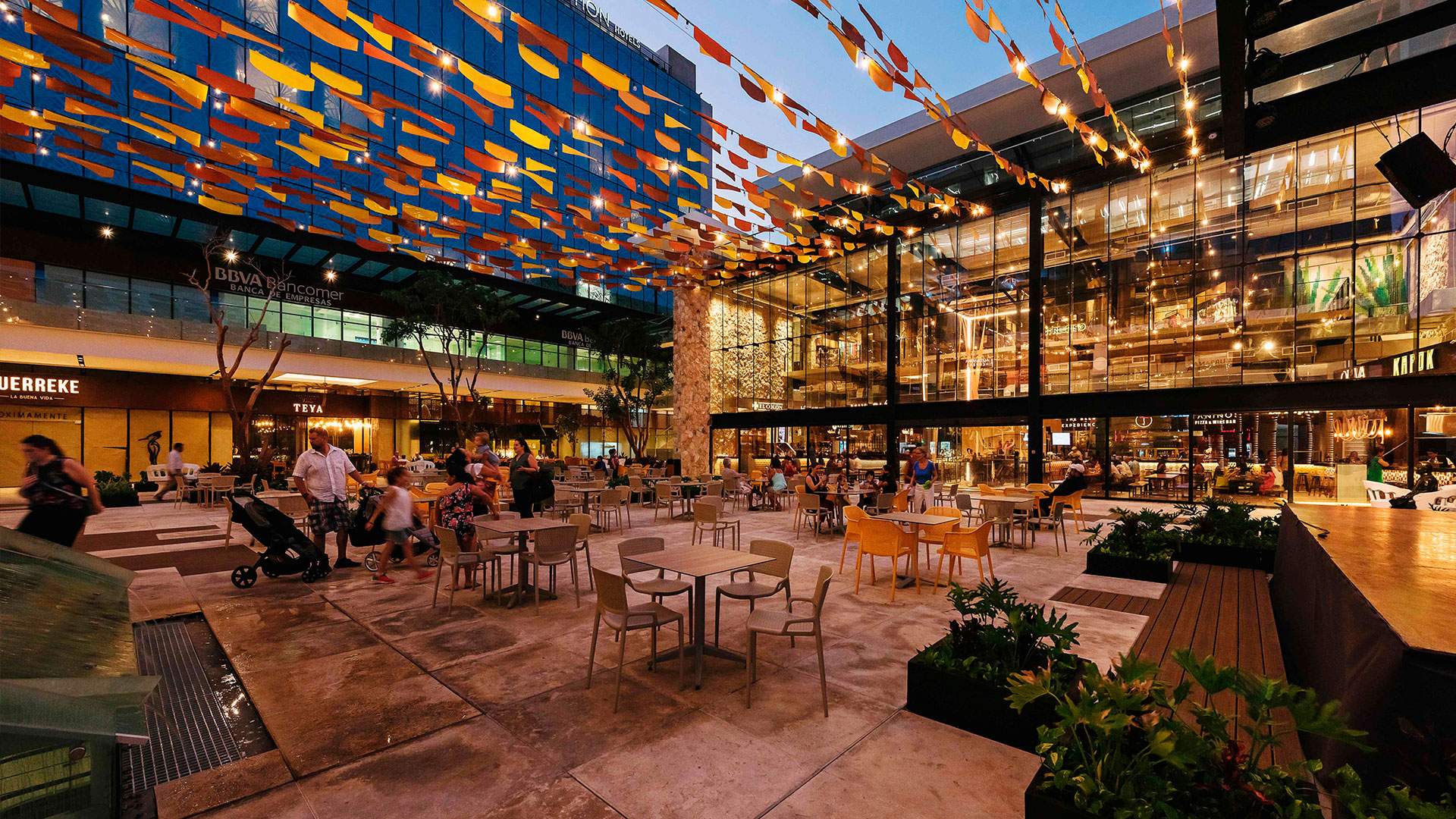
The Plaza opens generously to the city: A public invitation, shaded, permeable, and accessible. Trees, porticoes, and pathways intervened by "green sentinels" welcome pedestrians from the street, leading them into a cool and gracious interior.
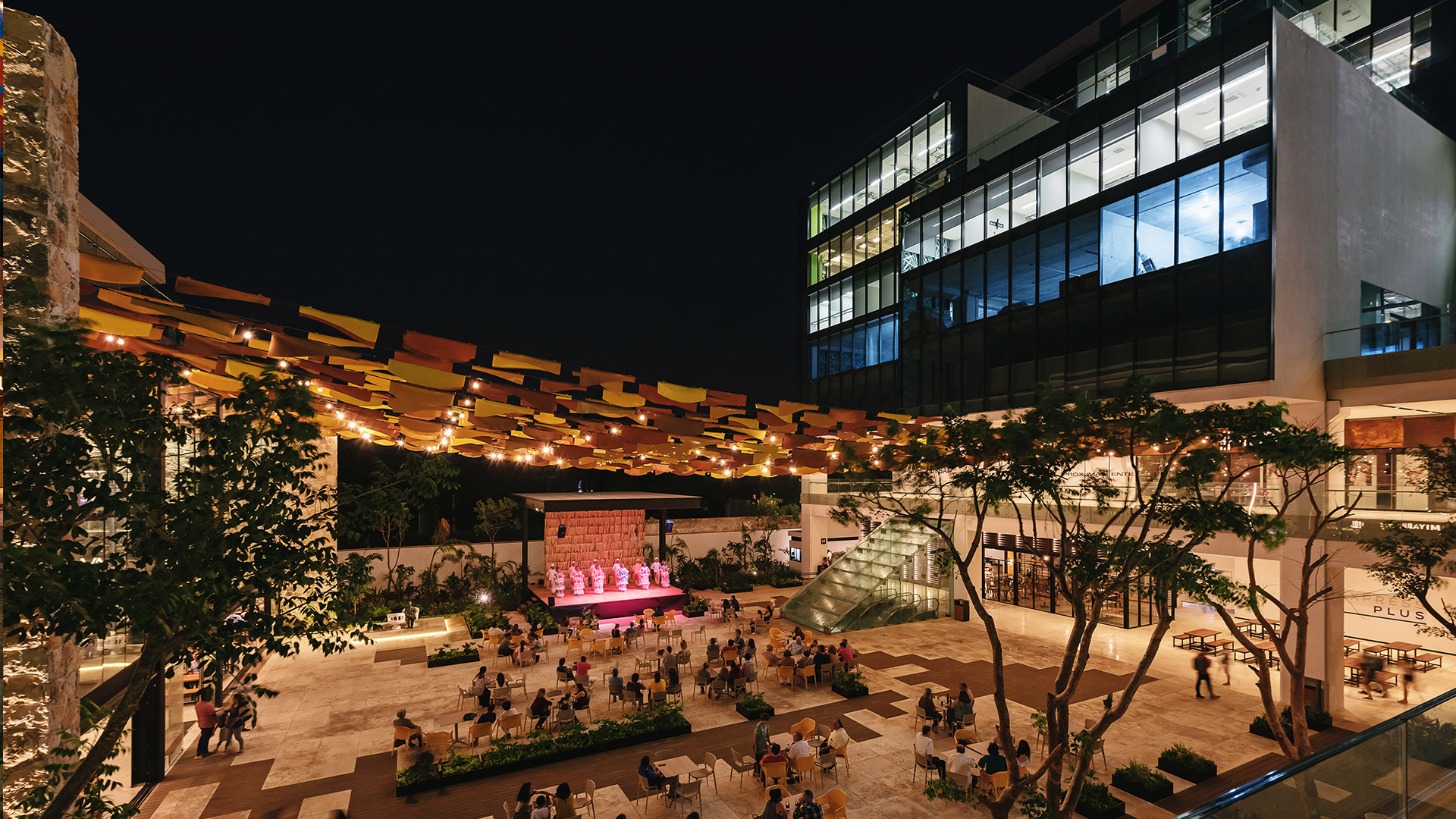
The Patio acts as a counterpoint: a naturally air-conditioned refuge, a space for cultural coexistence, capable of being festive or contemplative. Here, architecture works gracefully with light, shadow, and wind.
The entire complex is articulated around these two pillars, the plaza and the courtyard: circulation, access, commerce, hotels, offices. A simple conceptual gesture with profound urban impact.
THE PROCESS
Turning constraints into opportunities
The design of Paseo 60 was an exercise of precision, where three factors defined the strategy:
1. Heights
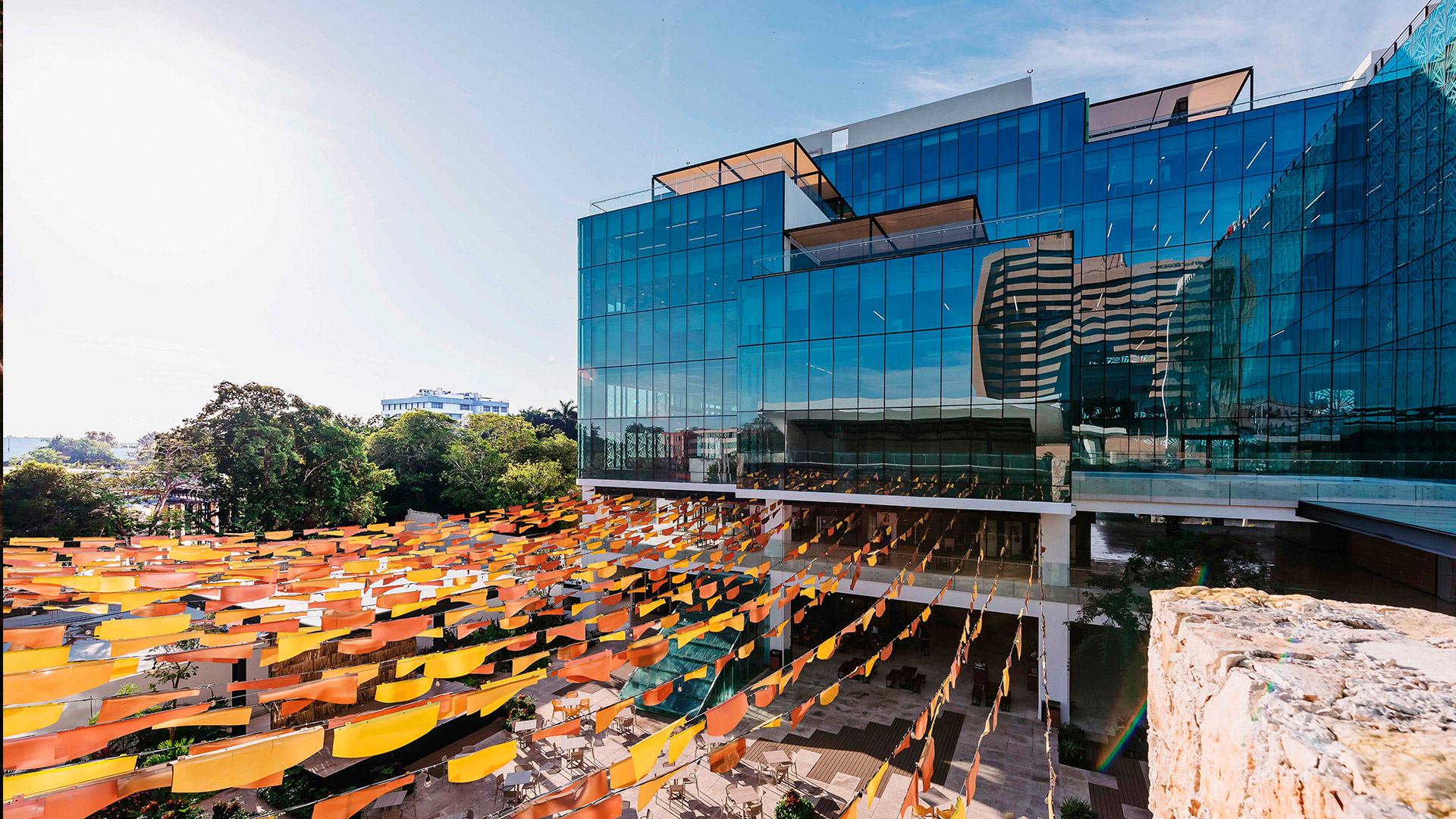
The building had to align with the height of the Fiesta Americana Hotel (a nearby existing hotel), respect the heritage scale, and preserve views of significant adjacent mansions. The resulting volumetry elegantly balances these decisions.
2. Privileged views
The historic landscape becomes part of the program:
- To the east, Paseo de Montejo and Quinta Montes Molina
- To the south, the Historic downtown
- To the west, Porfirian mansions
The architecture frames and celebrates these views, connecting the user with the city
3. Extreme sun exposure
All day exposed facades required specific solutions:
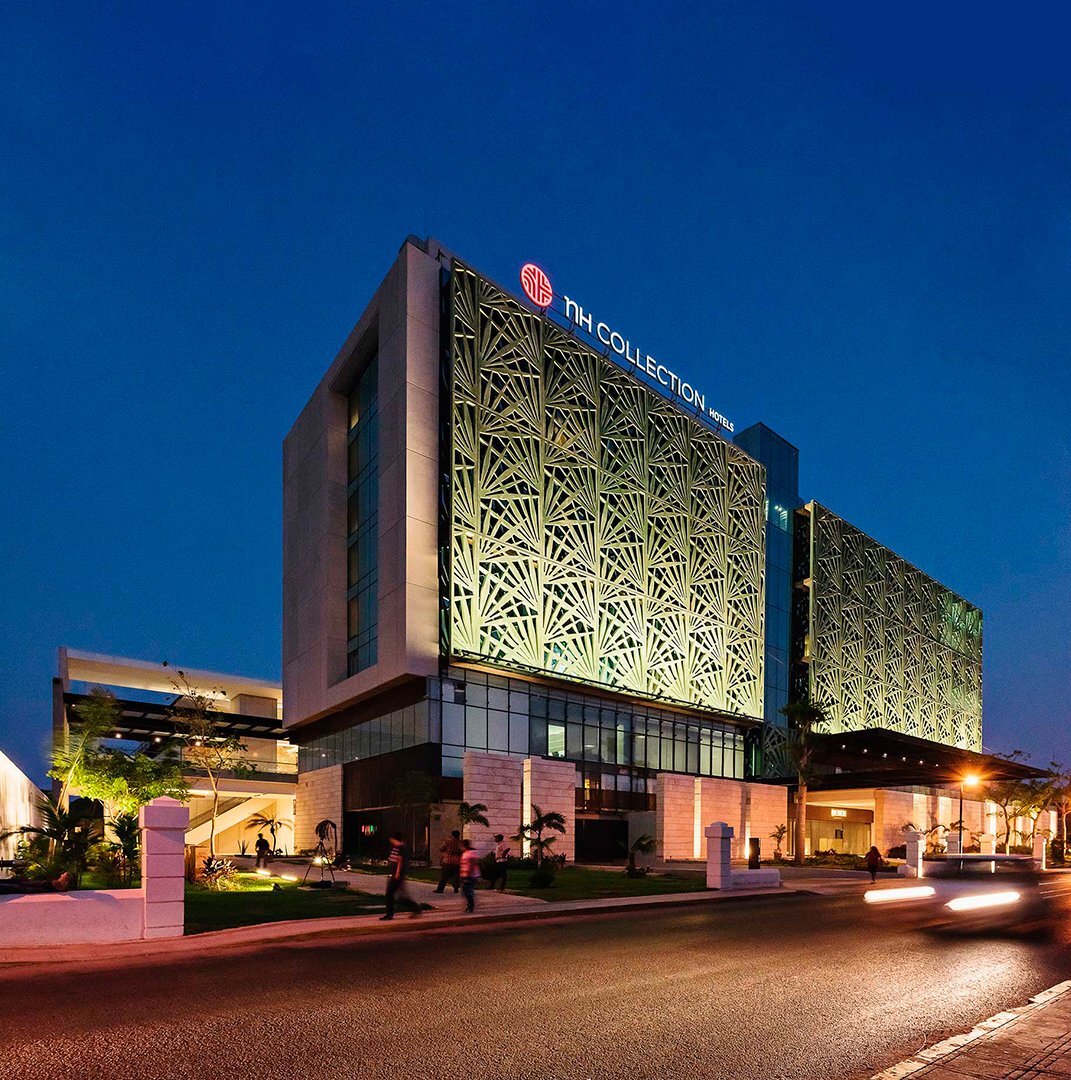
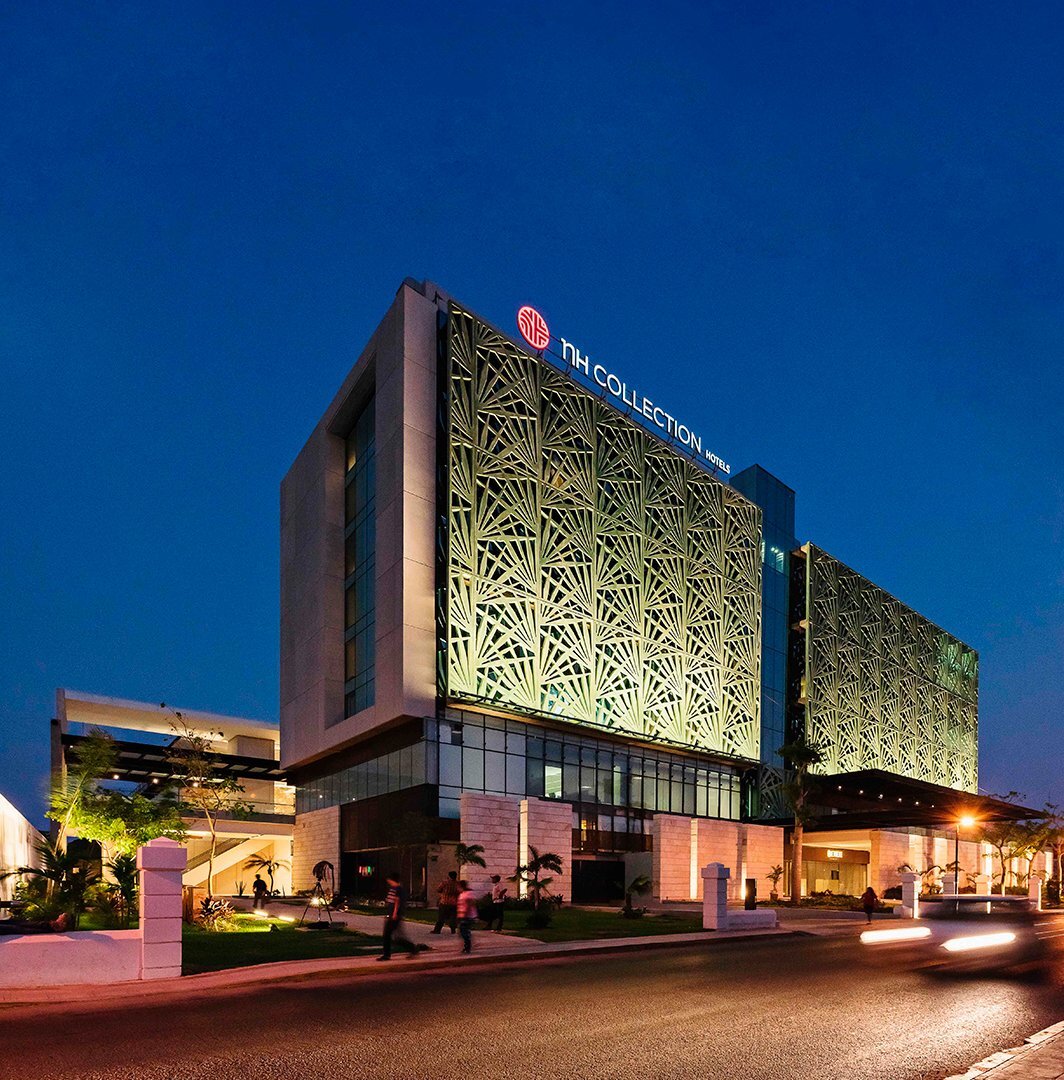
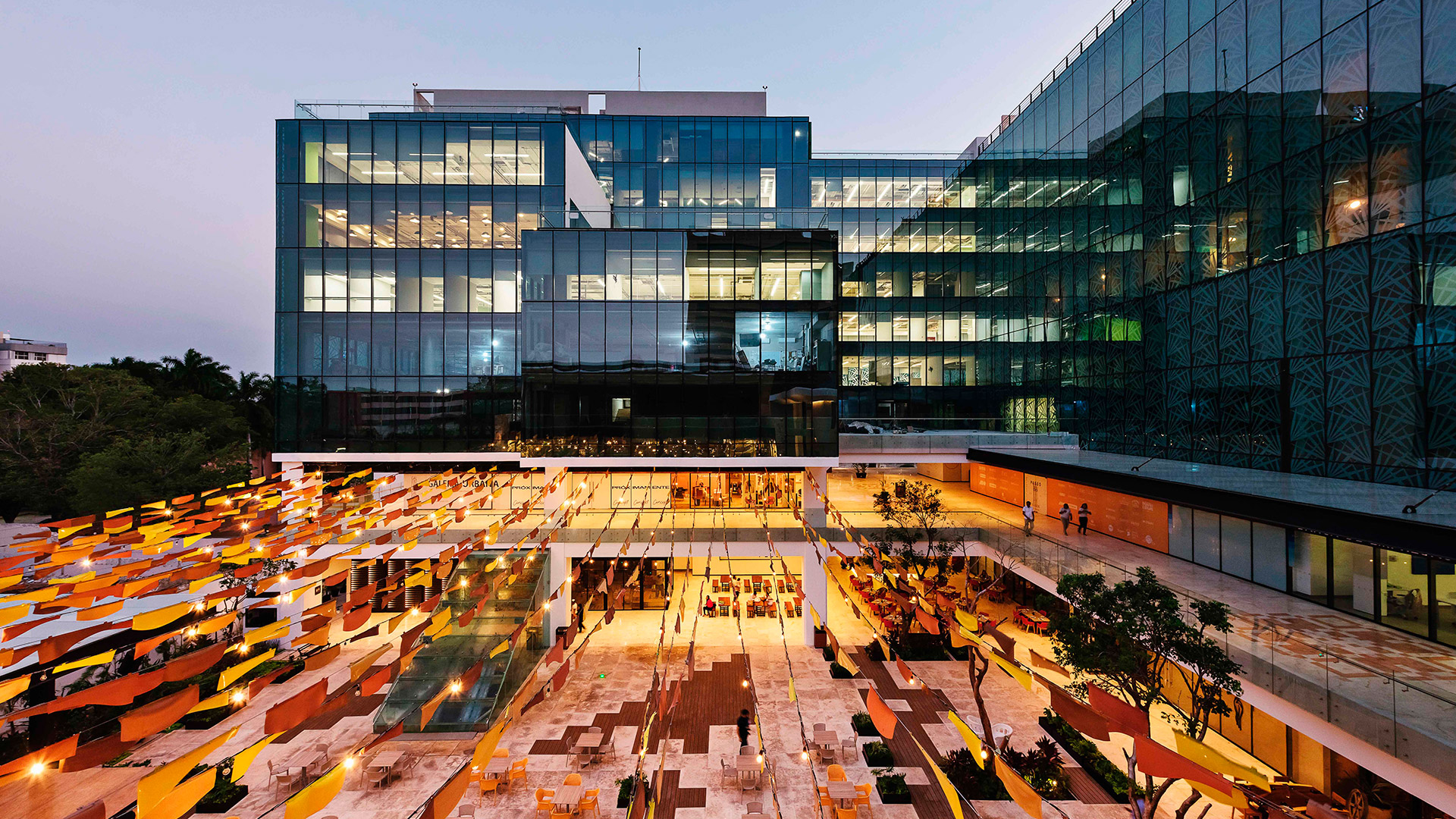
- West: Concrete lattice
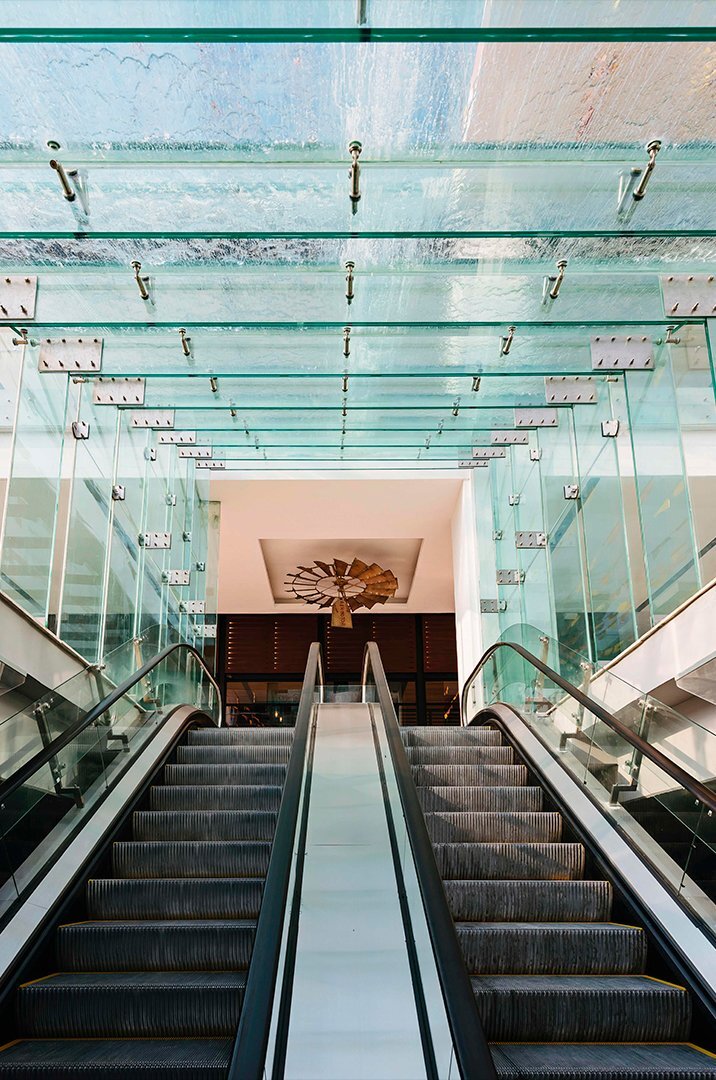
- East and South: Double fritted glass
- Microclimates: supported by vegetation and shading
Narrow bays, patios, and porticoes allow cross-ventilation, making the public space habitable even in the warm season. This is complemented by decisions that encourage staying: textile shade sails over the patio, native vegetation, and a cascading fountain to cool the atmosphere. Thus, we transformed adverse climatic conditions into allies.
THE RESULT
A contemporary complex that belongs to the region
Paseo 60 brings together gastronomy, tourism, corporate offices, and culture in a vibrant and accessible space. It is a 24/7 ecosystem where visitors and locals coexist and recognize one another.
The project:
- Regenerated an urban void
- Provides comfortable shaded public space
- Restores a respectful relationship with heritage
- Integrates diverse activities without losing coherence
- Achieves technical and bioclimatic efficiency
The different thematic layers evoke the henequen fields, a memory that dialogues with the origins of Paseo de Montejo. The result is a contemporary building that is deeply rooted in Merida and Yucatan.

LEGACY AND LEARNING
Redensifying with purpose
Paseo 60 demonstrates that it is possible to redensify the historic downtown without pushing out its history. It proves that mixed uses, when well executed, can coexist in harmony, and that architecture can weave community while strengthening the local economy.
As a firm, we reaffirm that:
- Technical collaboration is key
- Constraints can empower creativity
- Profitability is not at odds with urban quality
- Every work is an opportunity for social regeneration
Today, this project is a benchmark for how to reimagine urban heritage, restoring dignity to urban land and offering the city a place to reconnect once more.

Let's talk about your next project
If you have a project in mind that engages with its context, contributes to the community, and combines technique, efficiency, and beauty, we would love to hear from you. Contact us and let's explore the possibilities together.