DUARTE AZNAR ARQUITECTOS
Centro Estatal de Oncología de Campeche
Spaces for healing
GALLERY
PROJECT OVERVIEW
Can architecture be a companion in the healing process?
In Campeche, a city once walled to fend off pirates, architecture raises walls again—not for defense this time, but to safeguard hope
The Campeche’s State Oncology Center (CEOC) emerged with an essential purpose: to humanize healthcare. Conceived as part of the Campeche’s Specialty Hospital, this building had to house highly complex technology, but also vulnerable emotions. Its greatest challenge was to reconcile two opposing worlds: the technical precision of medicine and the human need for solace.
Our objective as a firm was to offer architecture that accompanies. Architecture that neither invades nor imposes, but rather offers refuge, rest, and dignity to those traversing one of life's most fragile moments.
Client
State Government
Project type
Health
Location
San Francisco de Campeche, Campeche, México
Built area
3,166
Years(s)
2005-2009
Awards & Publications
- AADAIH-IFHE International Award for Architectural Quality in Healthcare Buildings. Buenos Aires, Argentina, 2014.
Participants
Enrique Duarte Aznar
Luis Estrada Aguilar
Mauricio Gallegos Esquivo
Cindy Parra Roca
Collaborators
Structure: RJPASCACIO Engineers
Water and sanitation: HIDROTROL
Electrical: ILURGIA
Photography: Roberto Cárdenas Cabello
AWARDS & PUBLICATIONS
- Silver Medal at the 11th Mexican Architecture Biennial, 2010.
- Honorable Mention at the VII Yucatecan Architecture Biennial, 2009.
- Omni, Hospital, Archiworld Co. Ltd. 2010.
- Obras magazine. April 2007.
THE CHALLENGE
Medical precision and human warmth in a single design
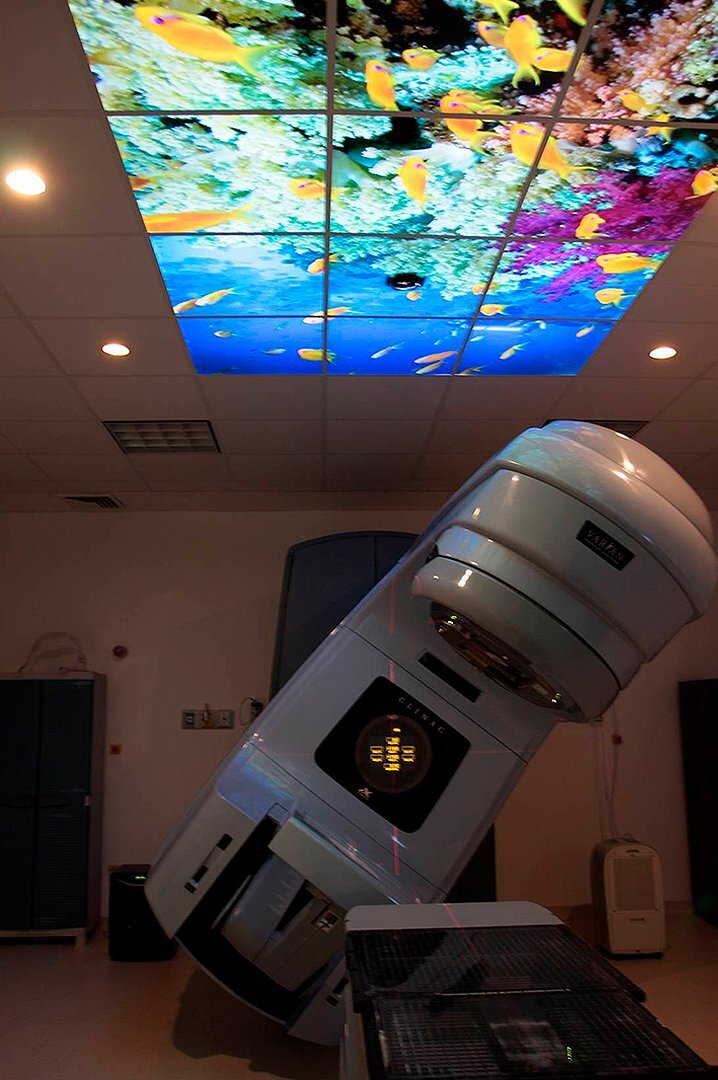
Designing an oncology hospital implied two simultaneous challenges: complying with strict radiological safety standards while creating spaces capable of mitigating pain and providing emotional support to patients and families.
It was necessary to articulate concrete walls over a meter thick with open, with luminous open gardens conciliating the technical with the human.
Furthermore, the irregular topography of the triangular site, bordering other medical facilities, demanded a highly precise functional layout, clear circulation, and a serene environment.
The guiding principle was to make a highly specialized hospital to inspire confidence, calm, and a sense of belonging.
THE CONCEPT
Architecture that protects and breathes
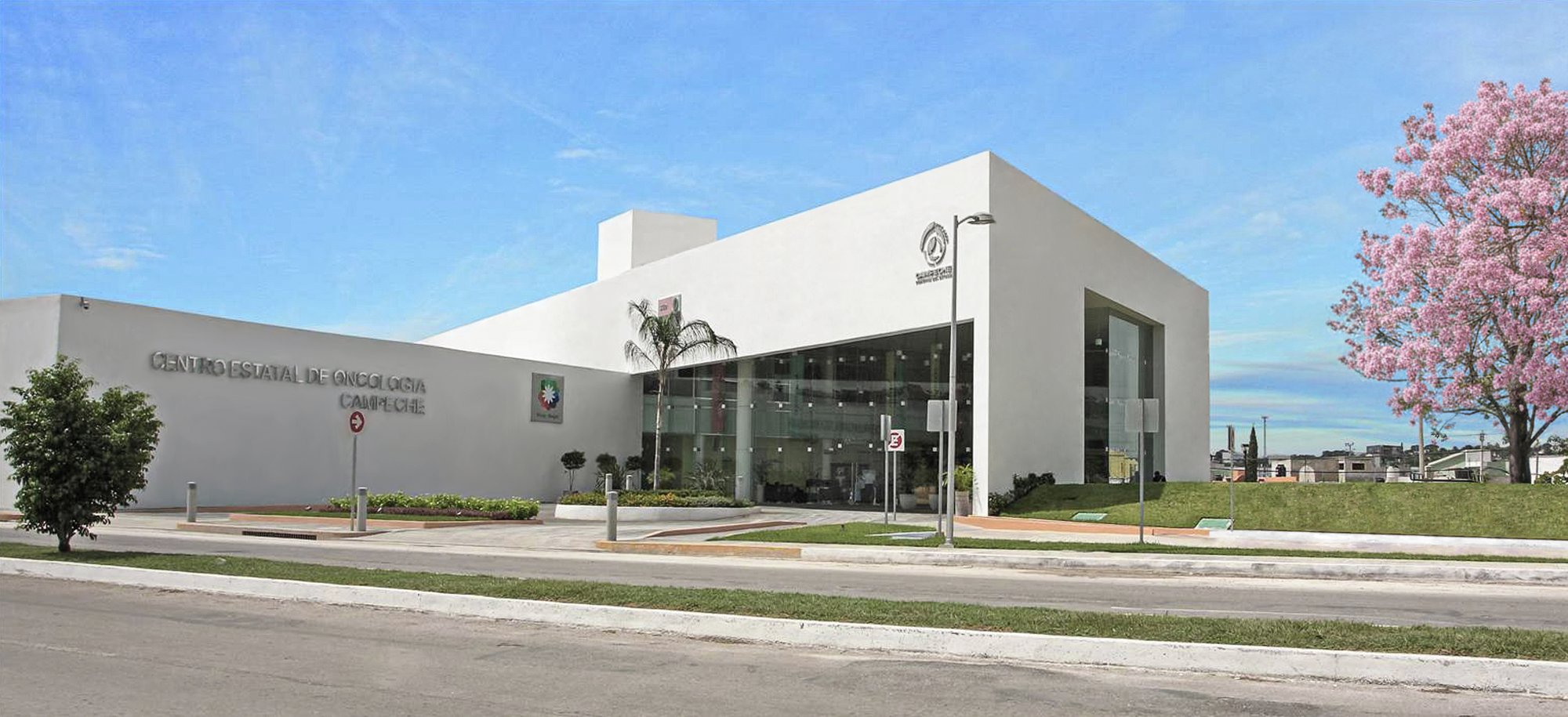
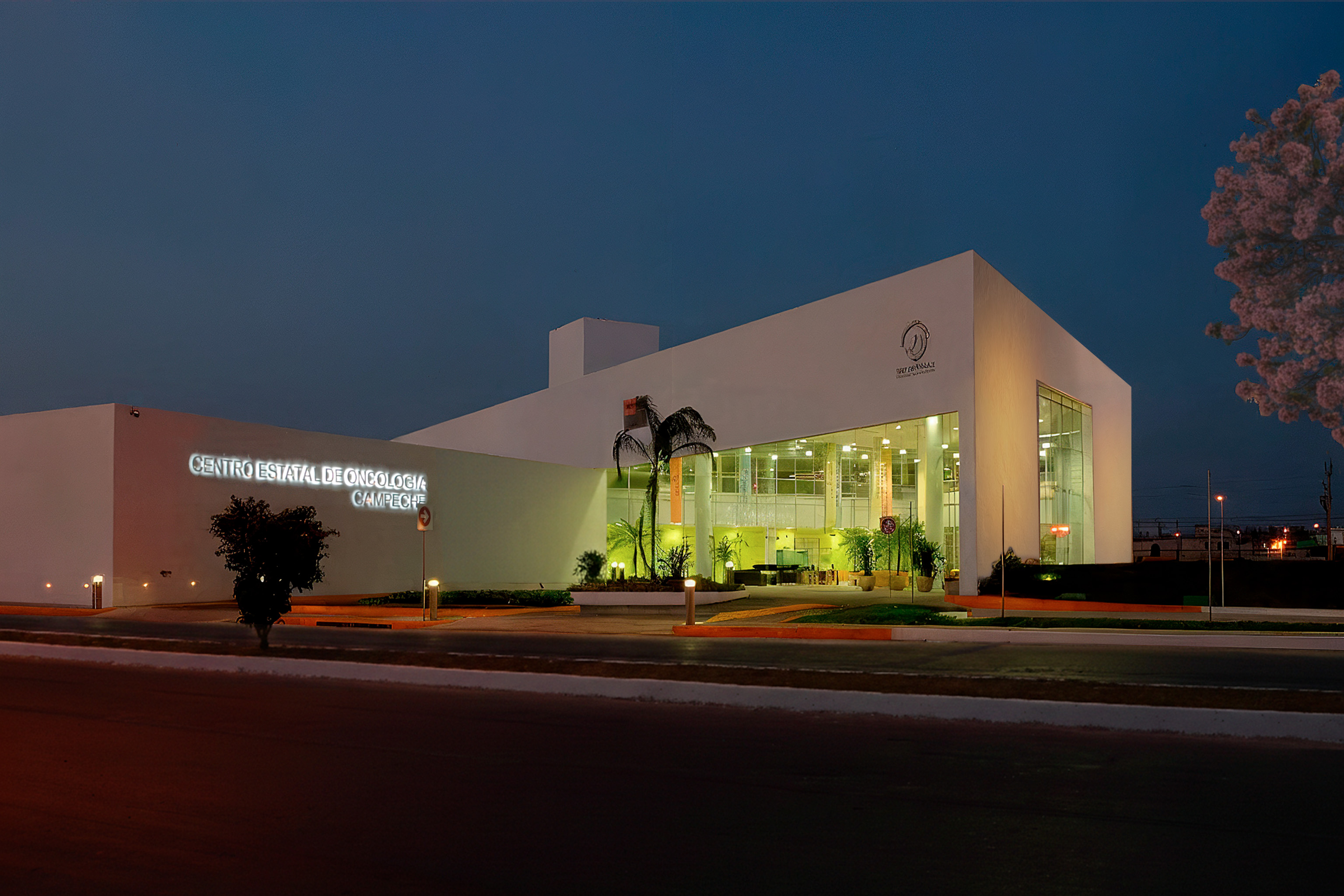
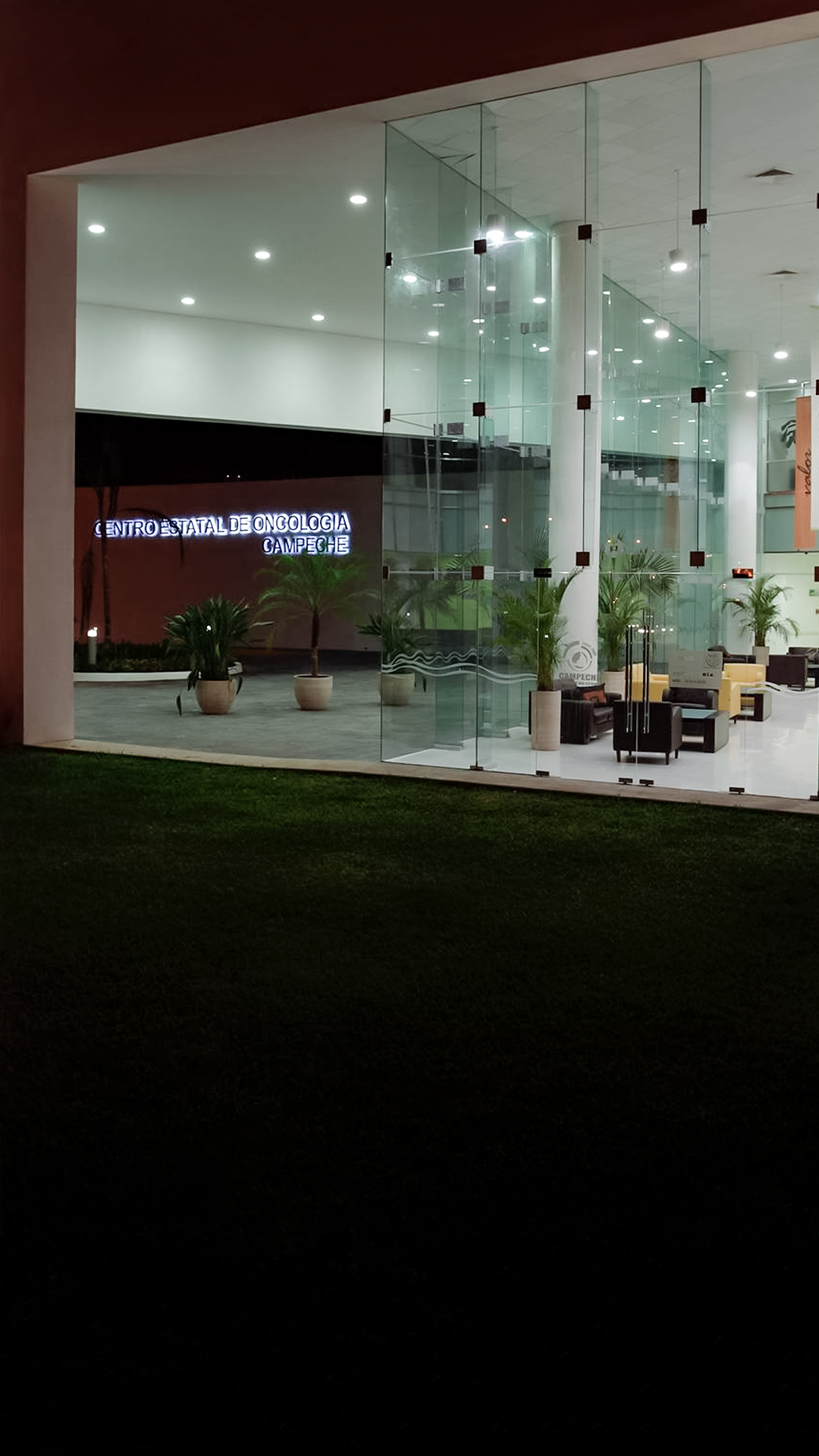
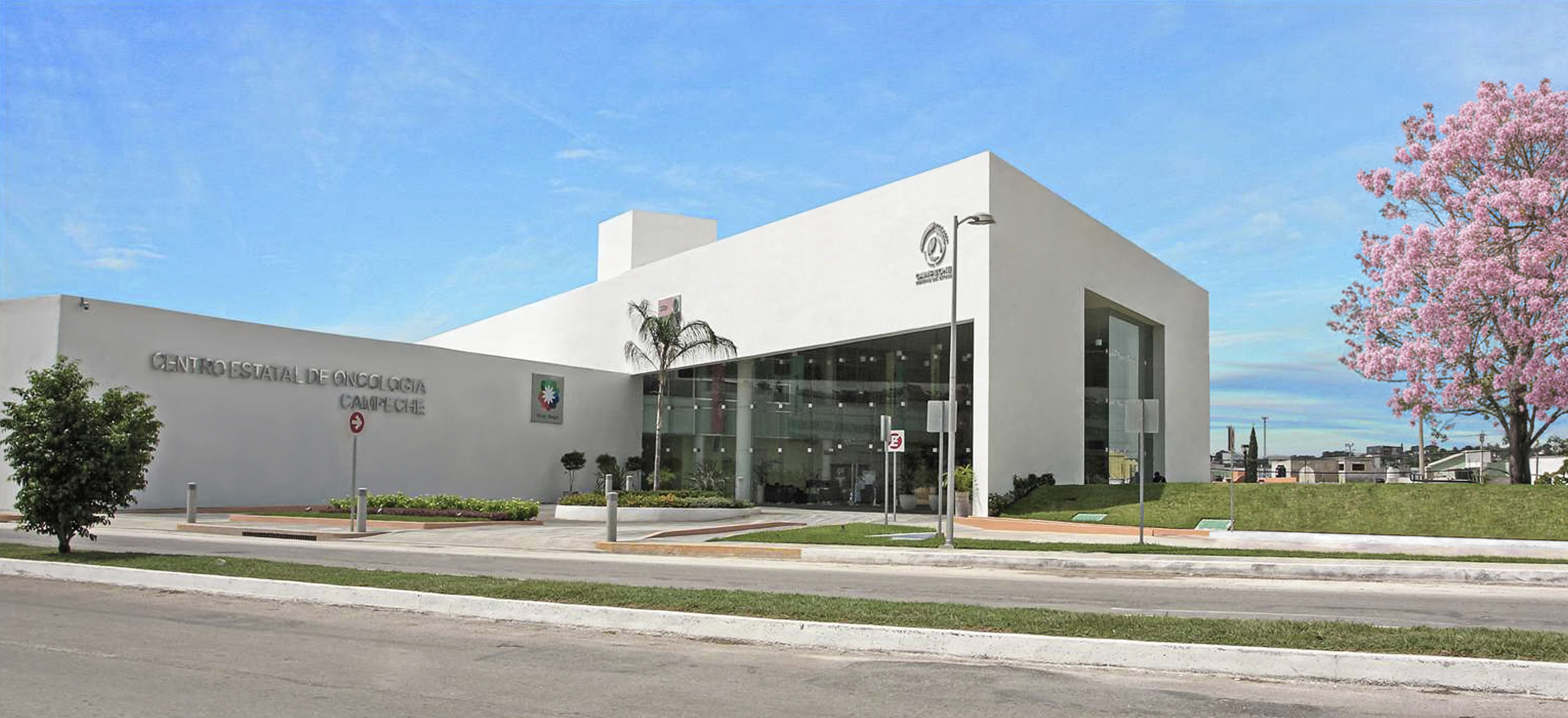
Inspired by the walled history of Campeche, the design adopts the symbol of the wall as a refuge and the patio as a living space. The complex is conceived as a sequence of courtyards and protective volumes that evoke security, containment, privacy, and serenity.
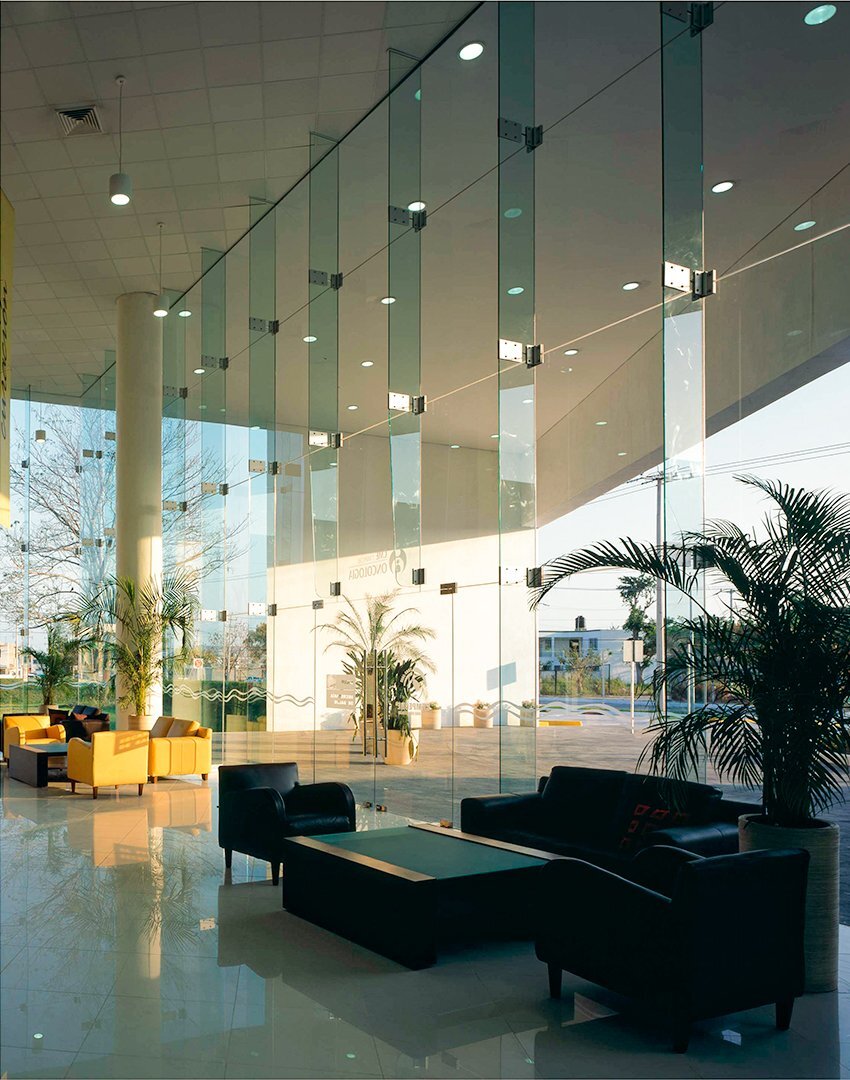
The more technical areas —such as radiotherapy— are isolated with massive walls, required by regulation, while care and waiting areas are open to light, air, and the surrounding landscape.
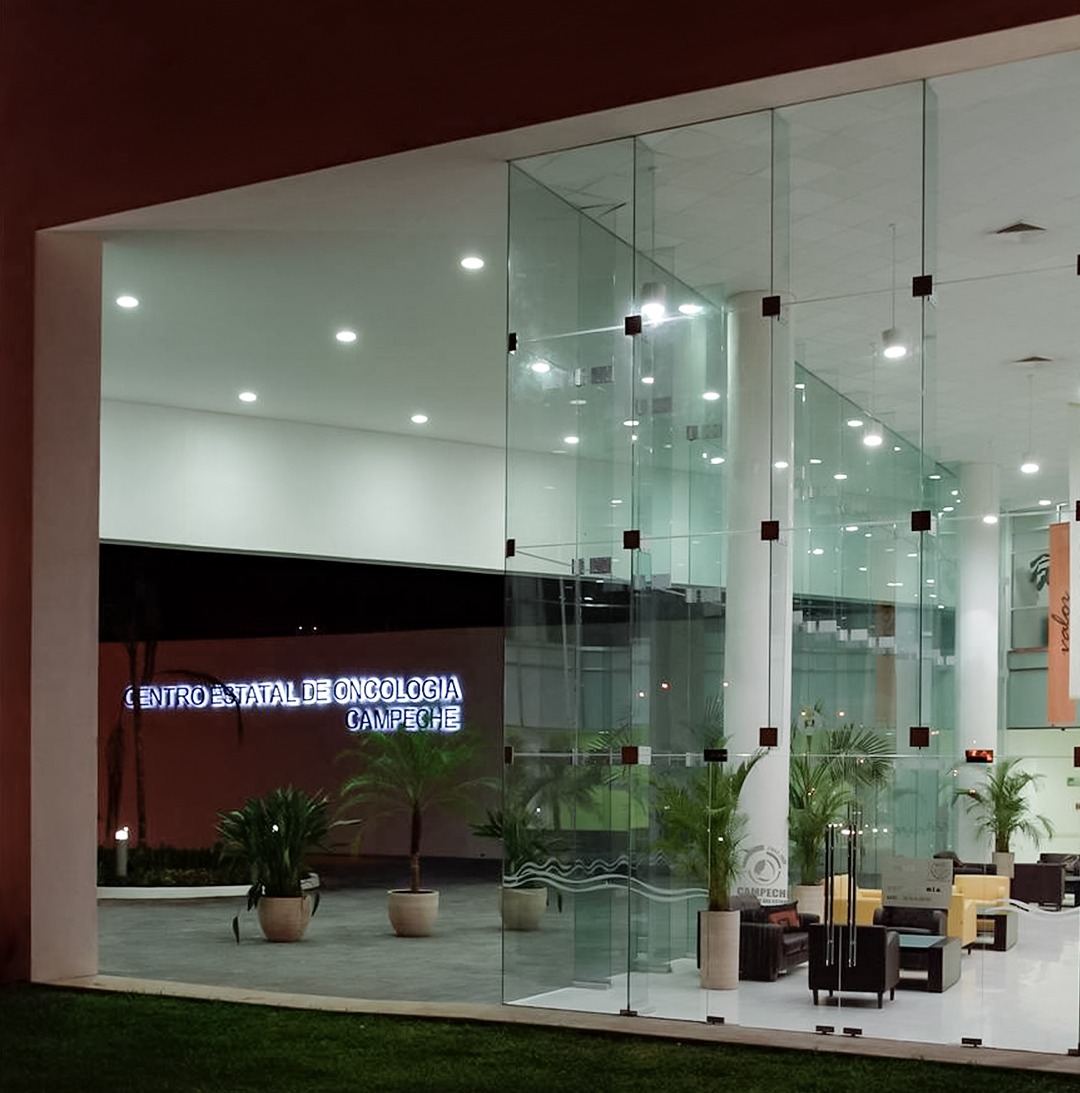
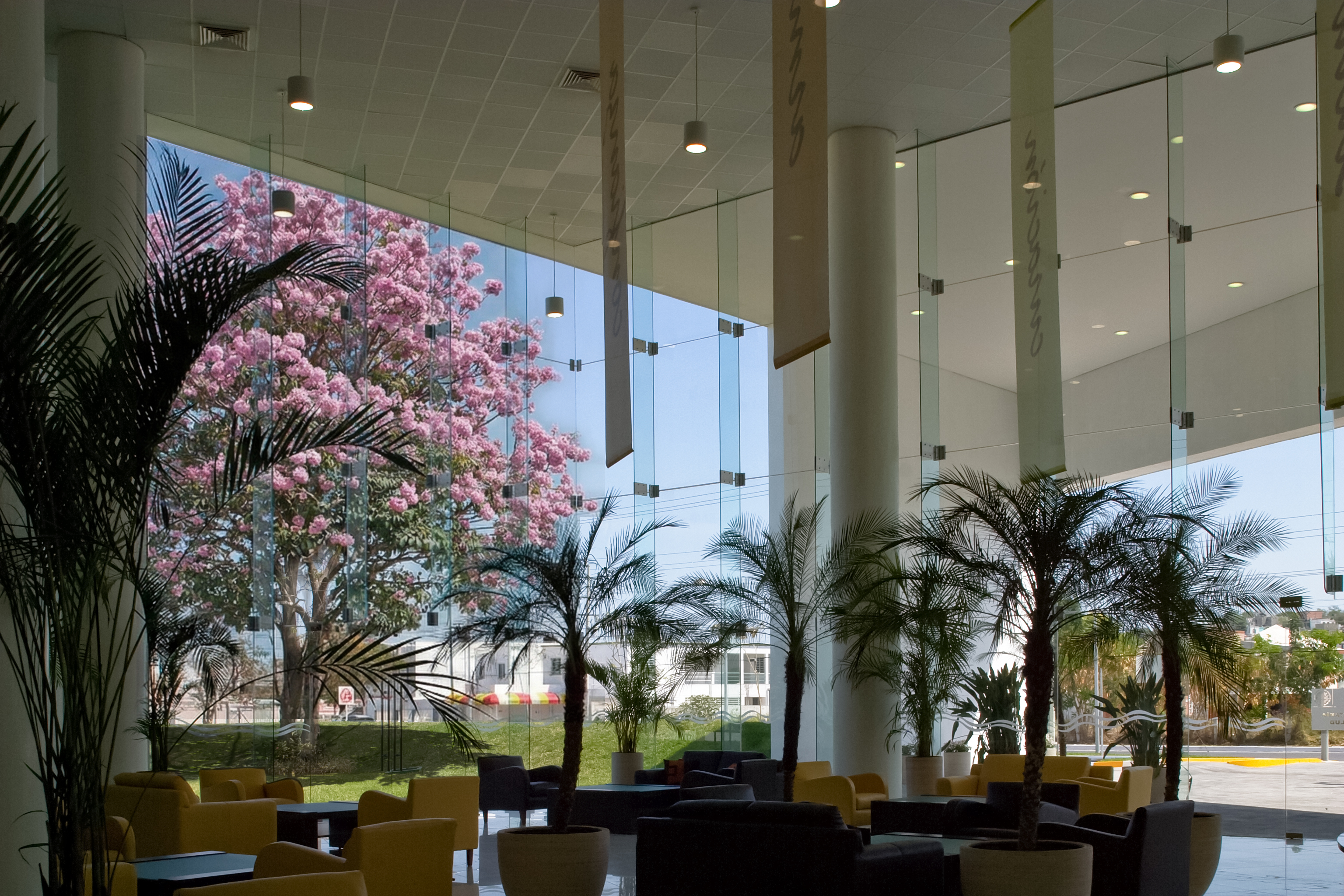
Natural light enters in a measured and controlled way, avoiding glare but providing a natural respite to the environment. The journey through the building thus becomes a transition between the clinical and the human, between precision and comfort. The patient, not the disease, is at the center of the composition.
Natural light enters in a measured and controlled way, avoiding glare while providing a natural rest to the concrete environment. The journey through the building thus becomes a transition between the clinical and the human, between precision and comfort. The patient, not the disease, is the center of the composition.
THE PROCESS
Building empathy
The design process started with listening. At the firm, we analyzed both the regulatory requirements and the symbolic and emotional dimensions surrounding medical care.
Every decision, from orientation to construction details, sought to favor physical and emotional comfort:
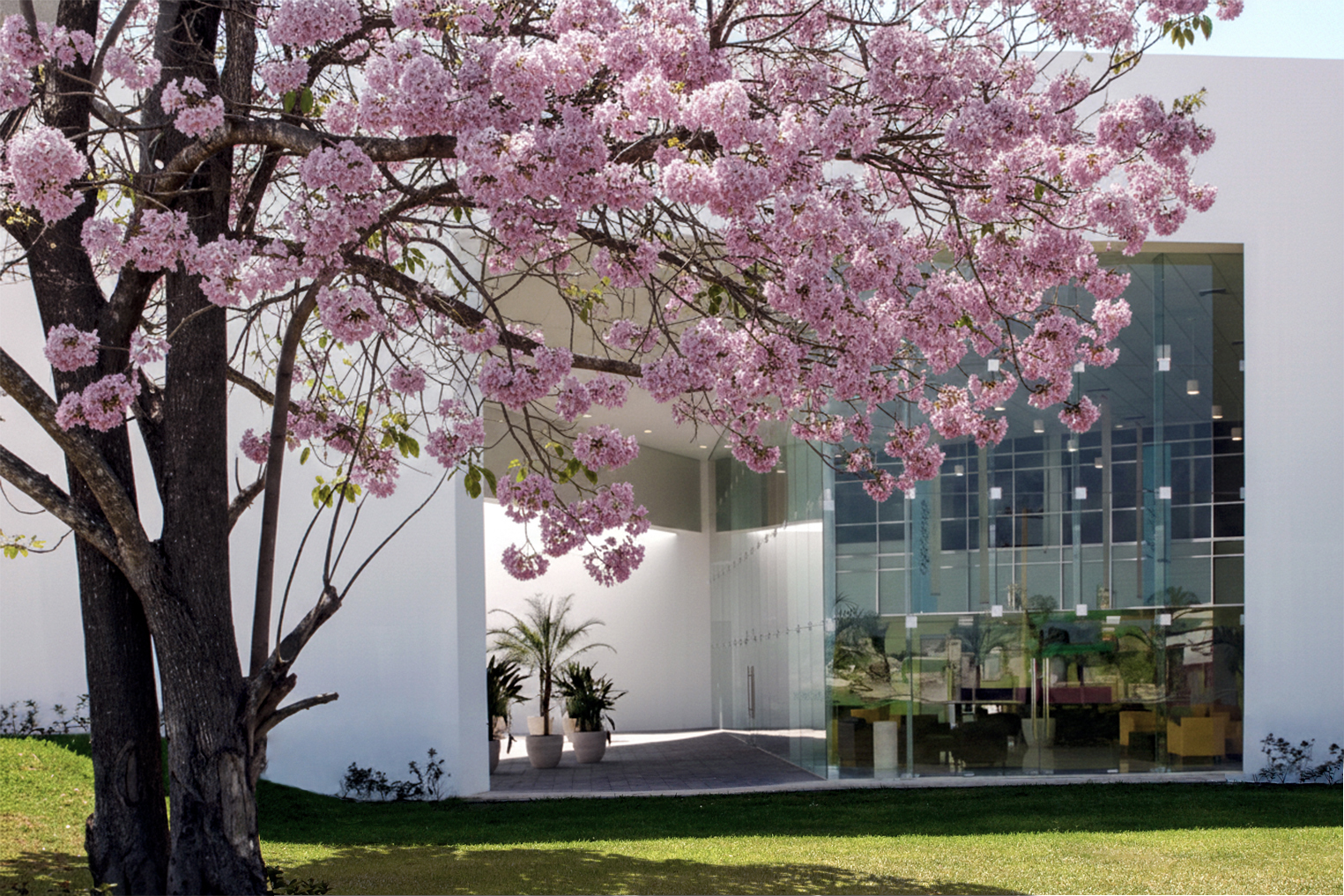
- A friendly, covered entrance that protects from the weather and welcomes visitors.
- Indoor gardens that offer visual and emotional rest.
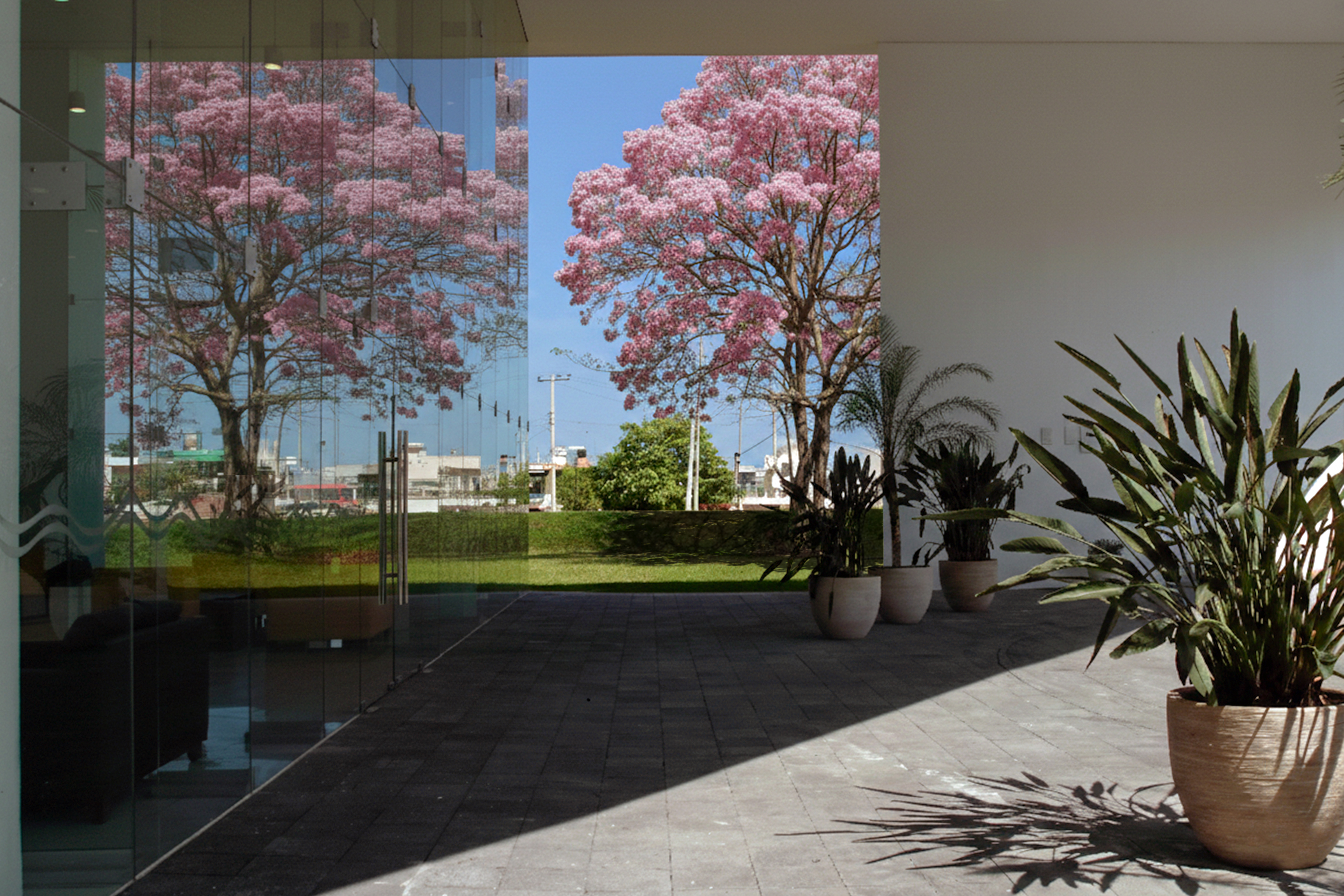
- Outdoor waiting rooms under a trumpet maculis tree, designed to reconnect with the fresh air and nature.
- Windows and openings that filter warm light, softening the hospital experience.
Even in the most controlled areas, we strove to maintain contact with the surroundings. Every material, every shadow, every patio was thought of as an active part of the recovery process.
THE RESULT
A hospital that feels like a refuge
Campeche’s State Oncology Center achieves a rare balance: it is both a technical building of medical precision and a space of profound humanity.
Specialized areas (chemotherapy, teletherapy, and brachytherapy) coexist with gardens and interior courtyards that soothes emotional tension. Patients are protected but not isolated; their privacy does not imply confinement. Nature appears in every corner: trees, shade, water, wind. The building does not impose silence; it proposes calm. It is an architecture that, without words, says “here you can heal with dignity.”

LEGACY AND LEARNING
Humanized architecture for healthcare
This project tested the coordination between technical specialties, government instances, and the sensitivity to translate regulations into well-being.
And it consolidated a conviction within the firm: architecture does not cure, but it can be a companion for healing
Campeche’s State Oncology Center is recognized today as a national benchmark in humanized hospital design, a model where functionality and empathy coexist in a space that not only provides treatment, but also inspires hope.

Let's talk about your next big project
If you want an ally to design a space that combines high efficiency, deep sensitivity, and mastery of context, we would love to hear from you.
At Duarte Aznar, we believe architecture can make a difference. Contact us, and let's talk about your next project.